The permitting roadblock

Why permitting is holding back agriculture

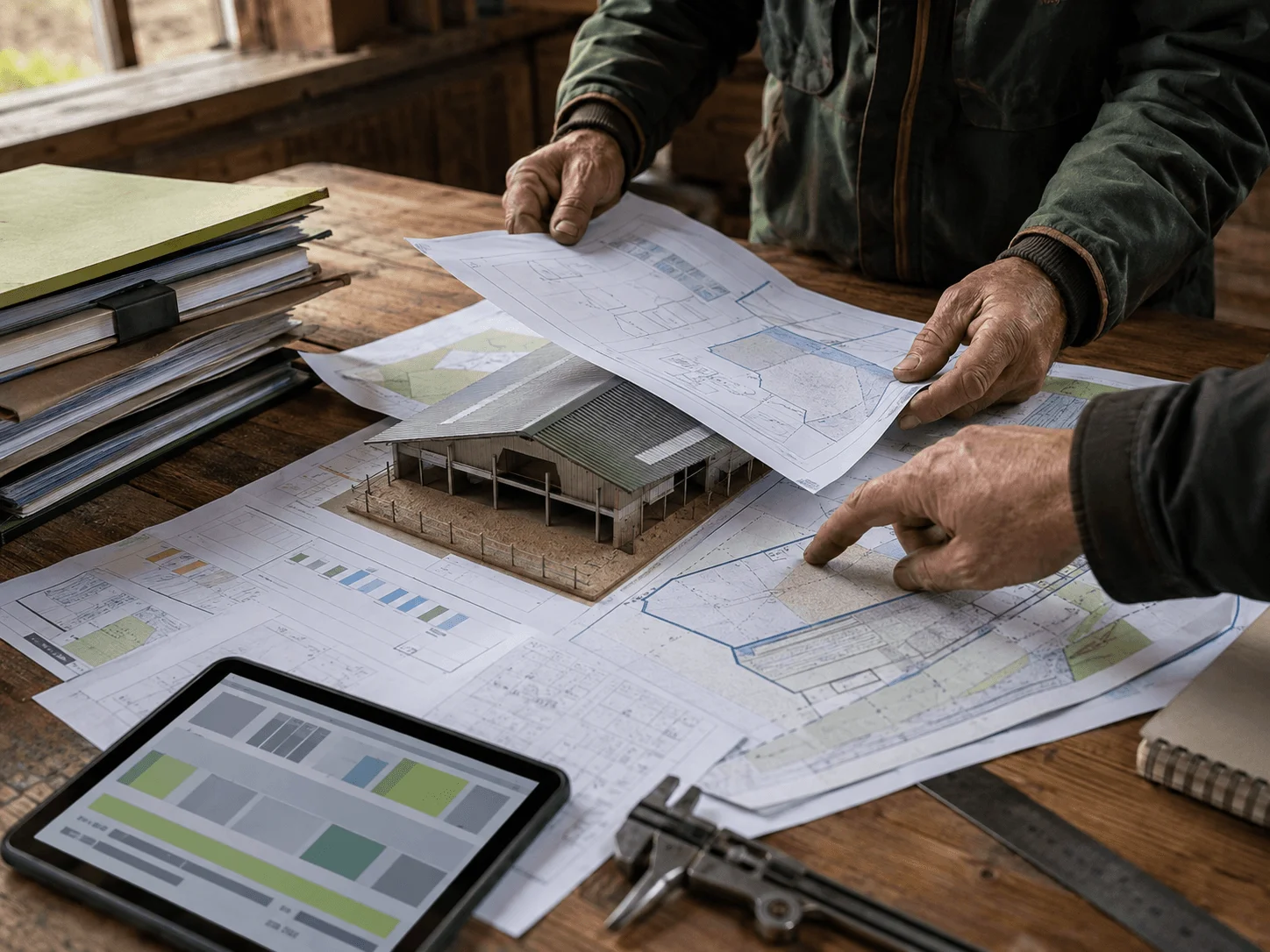
Across Europe, farmers and agricultural cooperatives are constantly looking to improve, modernise, invest and build more resilient businesses. Yet complex, costly and unpredictable permitting procedures leave far too many projects stuck on paper. Yet you may not realise just how widespread this problem is.

Explore the evidence
Why permitting is holding back agriculture
A clear signal from the field

What farmers told us

In 2025, Copa and Cogeca conducted two successive surveys among farmers and agricultural cooperatives to identify the main structural barriers holding back their development. More than 1,000 responses from farms and cooperatives of all sizes and across all agricultural sectors in 20 EU Member States pointed to the same conclusion.

62% identified burdensome regulations as a key obstacle
Survey question 01

What are the main challenges you face ?

Select a bar to inspect the response.

Burdensome regulations62%
Environmental rules hard to meet37%
Labour shortage32%
Low prices for animal products32%
Uncertainty related to input costs30%
Public opinion and animal welfare pressure28%
Competition from imports23%
Limited investment capacity15%
Dealing with animal diseases15%
Difficulties accessing markets4%
Difficulties accessing loans3%
Source: Copa and Cogeca surveys, 2025.
The rules stack up
Layer upon layer

The rules stack up

Among the regulations farmers find difficult to implement, the main ones are linked to EU directives, regulations and delegated acts: the CAP, nitrates, animal welfare, veterinary medicines and industrial emissions.

These rules become particularly problematic at the exact moment a farmer tries to launch a new project and needs a permit to move forward.

Survey question 02

Burdensome regulations

Response count

CAP environmental rules148
Nitrates Directive114
Animal Welfare113
Veterinary Medicines legislation79
Industrial Emission Directive56
Animal Health Law52
SPS standards48
Water Framework Directive39
Bird and Habitat Directive33
NEC directive29
EIA28
Legislations on Feed12
Marketing Standards12
Other31
Source: Copa and Cogeca surveys, 2025.
Survey question 03

What prevents you from making investments

Percentage of respondents

Too much uncertainty about the future65%
Difficulty getting permits or approvals53%
Lack of money or incentives39%
Lack of clear rules36%
Succession1%
Shortage of skilled workers1%
Bureaucracy1%
Source: Copa and Cogeca surveys, 2025.
Projects held on paper

Investment gets stuck

The survey results show permitting as a major structural barrier to the development, modernisation and competitiveness of EU agriculture.

For many farmers, obtaining administrative approval for a new project is one of the biggest obstacles to improving their production systems.

Investment gets stuck
No clear route forward

Inside the permit maze

Permitting procedures are excessively long, complex and unpredictable. Farmers can wait months or years while facing overlapping requirements, unclear timelines, inconsistent interpretations and duplicated administrative steps.

Survey question 04

Why do you have difficulties in getting a permit?

Select a reason.

Because the procedure is long and/or burdensome37%
Because the procedure is too expensive12%
Too high a risk of water or air pollution, such as nitrates, manure storage or greenhouse gas emissions9%
Too close to protected areas, including Natura 2000, rivers or drinking water zones7%
Because it does not comply with another environmental legislation7%
Because my municipality or the local authorities are opposed7%
Because my neighbours are opposed6%
For animal health or welfare reasons4%
Because NGOs oppose it4%
Because of zoning requirements4%
No difficulty reported3%
Source: Copa and Cogeca surveys, 2025.
The consequences travel further

The ripple effect

A delayed permit does not stop at one application. It changes what farms can afford, build and pass on.

01

EU and national environmental, animal welfare, water and biodiversity requirements are not always coherent. Near protected areas or under nitrogen frameworks, projects can be delayed, reduced or blocked entirely.

02

Applications, environmental assessments and technical studies can be prohibitively expensive. Similar thresholds for family farms and industrial operations deepen inequality and accelerate consolidation.

03

Permits are needed to upgrade buildings, improve animal welfare, adopt green technologies and reduce emissions. The system can block the very investments environmental policy is trying to encourage.

04

Municipalities, NGOs, neighbours or citizens can delay or stop projects. Important consultation processes are increasingly experienced as another unpredictable barrier.

05

Farmers hesitate to make long-term, capital-intensive investments when approval, conditions and timing cannot be predicted. That same uncertainty makes younger farmers less willing to take over a business.

A systemic bottleneck

Unlock the projects already waiting

Permitting is more than an administrative hurdle. It limits investment, delays innovation and weakens the resilience and competitiveness of European agriculture.

At a moment when the EU is advancing its Competitiveness Compass and strengthening its sovereignty, removing unnecessary uncertainty is essential to unlock the sector's full potential.

No comprehensive EU-level study yet quantifies the lost potential, but our map already illustrates the scale of the opportunity cost on the ground.